
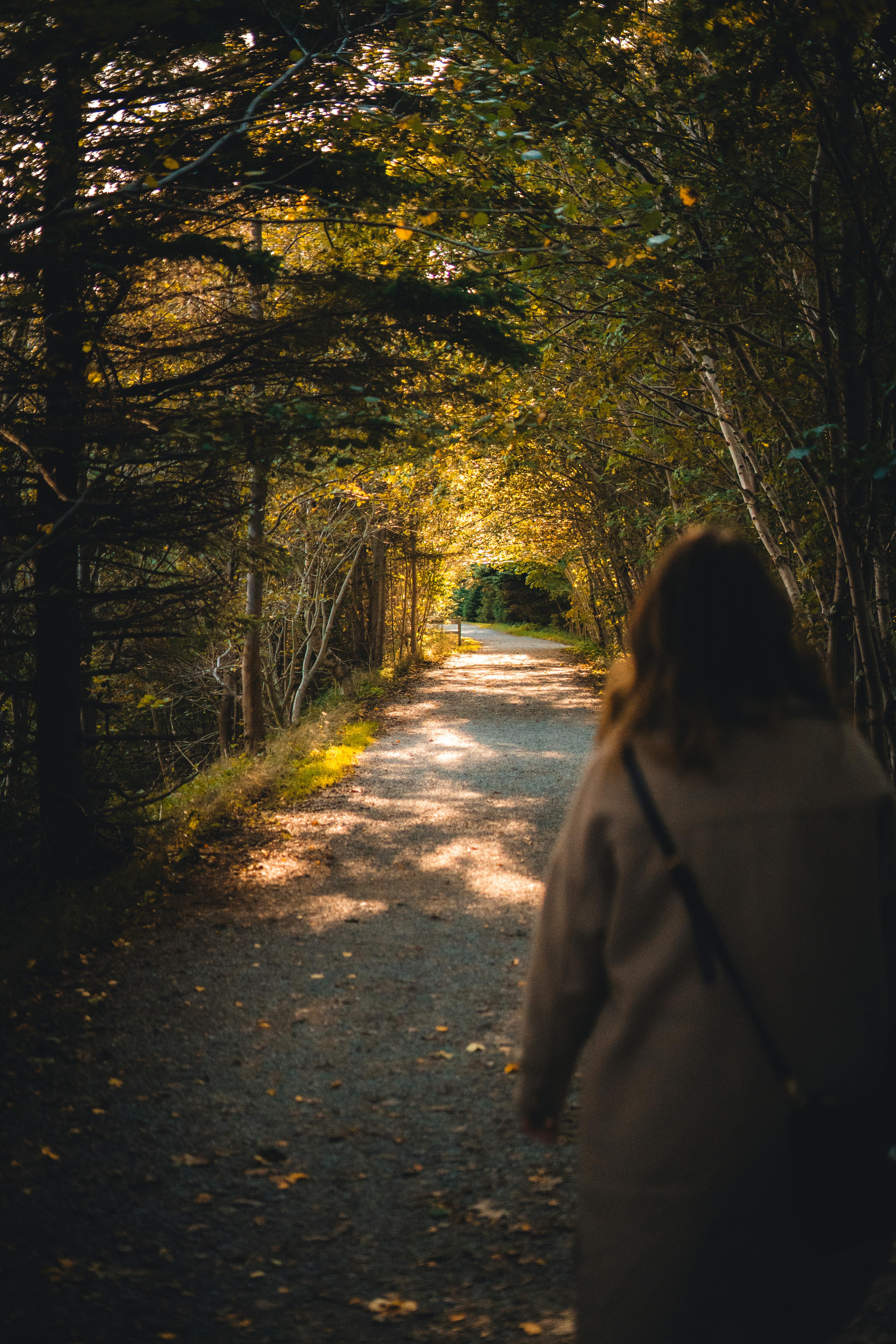
Walk without optimizing it
For ten minutes, let the walk be the whole activity. Do not use the time to return calls, listen to a podcast, or plan dinner. You can walk around your block, through a parking lot, along a hallway, or around a park.
First two minutes: feel movement
Notice the sequence of each step: heel, sole, toes, shift. Feel your arms move naturally. You do not need to walk unusually slowly. Normal pace keeps the practice connected to everyday life.
Next three minutes: notice sound
Let sounds come to you without searching for them. Traffic, birds, voices, air-conditioning, footsteps, or wind all count. Try hearing each sound without immediately deciding whether you like it.
Next three minutes: look outward
Notice color and shape. Pick out five different greens, three straight lines, or the way light hits one building or tree. This gently pulls attention out of mental loops and back into your surroundings.
Final two minutes: check in
Ask what your body needs next. Water? Food? A stretch? Quiet? Another five minutes outside? The purpose is not to reach a perfect state of calm. It is to become more available to the information your body is already giving you.
Use the walk as a reset, not a test
Some walks will feel peaceful. Others will feel distracted from beginning to end. Both are useful. The practice is the returning—not the quality of the mood you produce.